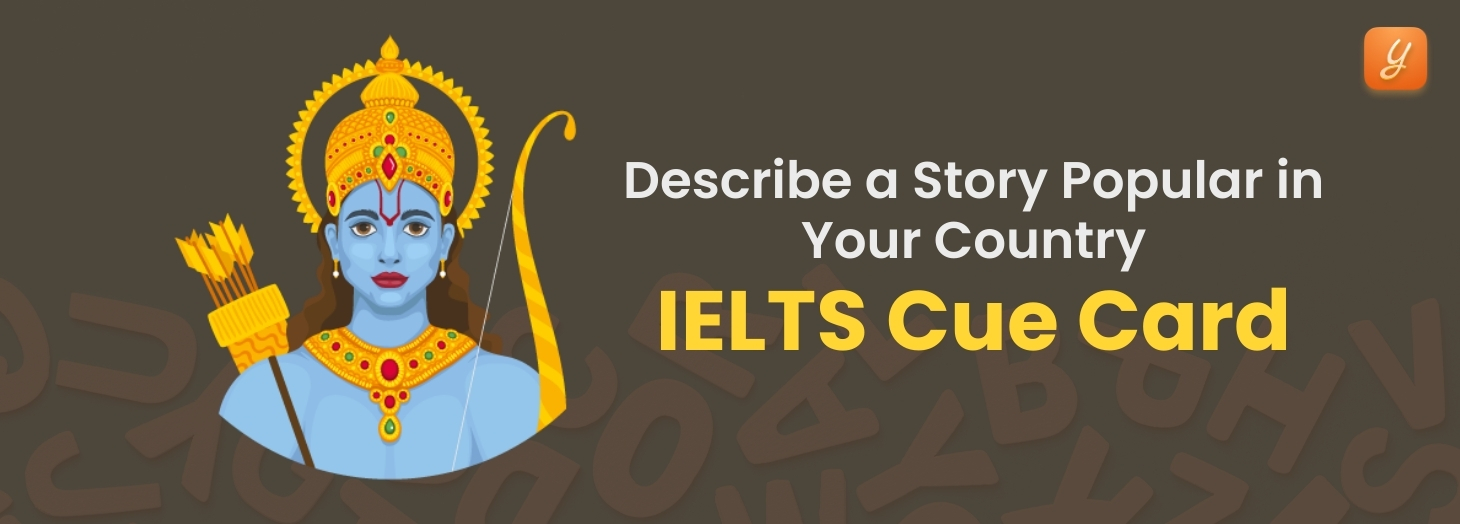
Narratives play a vital role in every community and society because they preserve traditions, impart lessons, and capture people's interest. These tales, ranging from ancient folklore to modern literary pieces, bridge gaps between individuals of all ages and across various nations. The "Describe a popular story in your country" Cue Card task on the IELTS (International English Language Testing System) exam gives test-takers a chance to demonstrate their linguistic proficiency while exploring their cultural background.
A crucial element of the IELTS examination is the spoken segment, which features a task known as the IELTS Cue Card. This exercise evaluates a candidate's capacity to communicate clearly and fluently on a designated subject within a set duration. The "Describe a story popular in your country" cue card theme is very common. To aid your preparation for the IELTS Cue Card assignment on "Describe a popular story in your country," we have compiled several model responses for your reference. These examples offer a structured approach to addressing the subject and can assist you in formulating your reply.
What is a Cue Card for the IELTS?
A speaking exercise in the IELTS exam referred to as an "IELTS Cue Card" provides the test-taker with a prompt or "cue" and instructs them to speak about it for one to two minutes. The cue card typically presents a question or scenario, and the candidate must respond using relevant facts, specifics, and personal experiences.
The IELTS Speaking Cue Card lasts for the following amount of time:
|
Task |
Duration |
|
Preparation Time |
1 minute |
|
Speaking Time |
1-2 minutes |
Suggested: Opinion Essay IELTS - Step By Step Guide
Why are IELTS Cue Cards Important?
The IELTS Cue Card is an essential part of the Speaking module, as it lets candidates prove their capacity to talk fluently, coherently, and with fitting content. The Cue Card task aims to assess the candidate's ability to:
- Organise and present their ideas in a logical and well-structured manner
- Supply comprehensive information and personal anecdotes related to the given topic
- Employ appropriate vocabulary, spelling, and pronunciation to convey their message effectively
- React naturally and display their capability to speak under time constraints
By performing well on the Cue Card task, candidates can exhibit their English communication skills and raise their overall IELTS Speaking score, a major component of the final IELTS outcome.
Describe a Story Popular in Your Country: Sample Answer 1
Introduction
Tales are fundamental to every community, reflecting a society's values, traditions, and beliefs. In my homeland, one of the most renowned and enduring legends is the tale of "The Ramayana," an ageless plot handed down from generation to generation.
What is the story about?
"The Ramayana" is an ancient Sanskrit narrative that chronicles the journey of Lord Rama, an incarnation of the Hindu deity Vishnu. The plot centers on Rama's exile from his kingdom, the abduction of his wife Sita by the demon monarch Ravana, and Rama's mission to save her, assisted by an army of monkeys and bears.
Why is the story famous in your country?
"The Ramayana" holds immense cultural and spiritual significance in my homeland, as it is considered one of the two great epics of Hinduism. The narrative's motifs of righteousness, loyalty, and the triumph of good over evil have resonated deeply with the populace, shaping their moral and ethical principles.
Beyond its religious significance, "The Ramayana" has also gained prominence across various artistic expressions, including literature, dance, and drama. Its characters and episodes have been depicted in numerous works of art, further cementing its position in the cultural heritage of my country.
How did you learn about this story?
I first encountered "The Ramayana" through the engaging oral traditions of my family. As a child, I would attentively listen to my grandparents recount the epic adventures, mesmerized by the vivid imagery and the larger-than-life figures. Later, during my school years, we examined the text more thoroughly, analyzing its literary and social importance.
Conclusion
"The Ramayana" is not merely a tale but a cultural emblem that has transcended time and space, connecting with generations of individuals in my nation. Its universal themes of love, hardship, and the victory of good over evil have established it as an everlasting work, and its enduring popularity stands as proof of the power of narratives in preserving and celebrating a nation's legacy.
Describe a Story Popular in Your Country: Sample Answer 2
Introduction
Every nation possesses a rich tapestry of narratives woven from the threads of history, culture, and societal customs. In my country, one tale that has captured the hearts and minds of citizens for centuries is the famous fable of "The Ant and the Grasshopper."
What is the story about?
"The Ant and the Grasshopper" is an enduring fable that imparts vital lessons regarding diligence, patience, and foresight. The narrative centers on two contrasting figures: the hardworking ant who labors industriously throughout the summer, collecting and storing provisions for the winter, and the carefree grasshopper who spends the warm months singing and playing without making any preparations.
When winter arrives, the ant is well-equipped with a food reserve, while the grasshopper struggles to survive in harsh conditions. The grasshopper approaches the ant, pleading for assistance, but the ant turns him down, reminding him of his idleness and lack of planning.
Why is the story famous in your country?
This straightforward yet meaningful tale has resonated deeply with the citizens of my nation, as it aligns with our cultural principles of hard work, self-reliance, and prudent planning. In a community where personal discipline and foresight are highly valued, the narrative acts as a cautionary tale, encouraging both youth and adults to embrace a diligent and responsible lifestyle.
Additionally, the fable's universal themes and straightforward narrative make it accessible to individuals of all ages and backgrounds, enabling it to transcend international and linguistic barriers.
How did you learn about this story?
I first encountered The Ant and the Grasshopper during my early childhood, when my family and teachers frequently shared this narrative with me and my peers. The story's straightforward yet powerful message was reinforced through various mediums, such as illustrated books, animated movies, and classroom discussions.
As I matured, I developed a deeper appreciation for the fable's foundational wisdom and its relevance to daily life. It became a focal point for conversations regarding ethics, work ethic, and the significance of being ready for challenges and adversity.
Conclusion
The Ant and the Grasshopper may be an uncomplicated story, but its enduring popularity in my country stands as proof of its timeless and universal appeal. Through its engaging plot and deep-seated morals, this tale has woven itself into our cultural fabric, continually reminding us of the virtues of perseverance, dedication, and thoughtful preparation—qualities that have molded the identity of our nation for generations.
Suggested: Latest IELTS Writing Topics and Questions
Introduction
Narratives can transcend time and borders, capturing the hearts and imaginations of people across generations and societies. In my homeland, one such story that has left an indelible mark on our collective consciousness is the renowned folklore of The Pied Piper of Hamelin.
What is the story about?
The Pied Piper of Hamelin is a well-known German folktale dating back to the Middle Ages. The plot centers on the town of Hamelin, which was plagued by a massive rat infestation. Desperate to rid their settlement of the vermin, the residents engaged an enigmatic piper, attired in vibrant garments, who promised to draw the rats away using mesmerizing melodies.
True to his word, the musician played his enchanted pipe, and the rats trailed him out of the municipality, captivated by the tune. However, when the townspeople refused to compensate the piper for his labor, he enacted a severe vengeance. He played his instrument once more, enticing the town's youth away and guiding them into a cavern within the neighboring mountain, never to be seen again. This traditional tale serves as a warning regarding the importance of keeping one's promises and the consequences of greed and dishonesty.
Why is the story famous in your country?
The Pied Piper of Hamelin has captured the imagination of people in my country for several reasons. The narrative's fantastical elements, featuring a magical musician and his enchanting melodies, appeal to the sense of wonder and curiosity shared by many cultures.
Furthermore, the story's underlying moral lessons concerning honesty, integrity, and the necessity of keeping one's word resonate strongly with the principles upheld in our community. This cautionary tale acts as a lesson regarding the repercussions of greed and deceit, instilling these values in youngsters from a tender age.
How did you learn about this story?
I initially encountered The Pied Piper of Hamelin through various channels during my formative years. My parents and grandparents would recount the legend, frequently embellishing it with vivid details and dramatic storytelling techniques. At school, we studied traditional tales as part of our literature curriculum, analyzing their symbolism and cultural significance.
The narrative's lasting success has also inspired numerous adaptations across different artistic mediums, including picture books, animated films, and theatrical productions, further cementing its place in our cultural memory.
Conclusion
The Pied Piper of Hamelin is much more than a mere folktale; it is an enduring narrative that has embedded itself into our nation's cultural ethos. Through its compelling storytelling, magical elements, and profound ethical lessons, this famous fable has crossed borders and generations, connecting with individuals of all ages and backgrounds. Its persistent success serves as a testament to the power of stories in preserving and celebrating the rich tapestry of our cultural heritage.
Describe a Story Popular in Your Country: Sample Answer 4
Introduction
Every nation possesses its own distinct tapestry of tales woven from the threads of history, culture, and traditions. In my country, one narrative that has seized the hearts and minds of the populace for generations is the legendary story of The Shahnameh, a masterpiece that has become an integral component of our literature and cultural legacy.
What is the story about?
The Shahnameh, or The Book of Kings, is a monumental epic poem composed by the celebrated Persian poet Ferdowsi during the late 10th century. This expansive work spans more than 60,000 verses and chronicles the mythical and historical past of Greater Iran, stretching from the creation of the universe to the Arab conquest of Persia in the 7th century.
The Shahnameh constitutes a rich mosaic of storylines featuring accounts of legendary heroes, epic battles, forbidden romances, and timeless moral teachings. It details the reigns of successive dynasties, ranging from the mythical Pishdadian era to the historical Sassanid Empire, blending elements of Persian mythology, folklore, and factual history.
Why is the story famous in your country?
The Shahnameh holds a unique status in my homeland, as it is regarded as a literary treasure that has profoundly molded our cultural identity and national consciousness. Beyond its literary value, the epic has served a vital function as a repository of our collective memories, values, and aspirations.
The accounts of bravery, self-sacrifice, and moral fortitude depicted in The Shahnameh have struck a profound chord with the citizens of my country, fostering a deep sense of pride and resilience in the face of adversity. The epic's enduring triumph can likewise be attributed to its poetic brilliance, with Ferdowsi's refined verses celebrated as pinnacles of Persian literature.
How did you learn about this story?
My journey with The Shahnameh began during my childhood, when my parents and grandparents shared stories from the epic, amazing me with the heroic feats of figures like Rostam and Sohrab. As I matured, I explored the text more thoroughly, examining it academically and uncovering its deep significance and literary value.
The Shahnameh has also inspired multiple artistic expressions in my homeland, including miniature paintings, calligraphy, and contemporary adaptations in cinema and stage productions. These creative interpretations have further cemented the epic's place in our cultural heritage, making sure its narratives continue to be appreciated and passed down through the years.
Conclusion
The Shahnameh is far more than a legendary poem; it is a living manifestation of a society's cultural essence, a tribute to the strength of storytelling in preserving and celebrating our profound heritage. Through its compelling accounts of bravery, ethical lessons, and poetic craftsmanship, this celebrated masterpiece has transcended eras and borders, motivating generations of readers and creators alike. Its lasting triumph demonstrates the enduring capacity of literature to shape the collective consciousness of a nation and guarantee that our legends, principles, and aspirations endure.
Sample/Follow-up Questions and Their Answers
After you respond to the IELTS Cue Card prompt Describe a popular story in your country, the examiner might ask you additional questions to further investigate the subject and evaluate your language proficiency. Here are several sample follow-up questions and potential responses:
- What do you think makes a story famous and enduring?
Several factors contribute to a narrative's renown and longevity. First, the tale must feature universal themes and relatable characters that resonate with individuals across various societies and demographics. A captivating narrative style, rich in descriptive imagery and emotional depth, can mesmerize the listeners and create a profound effect.
In addition, stories that reflect a community's values, traditions, and cultural practices are more likely to become embedded in the collective mindset. These accounts act as a bridge connecting yesterday and today, preserving cultural history and transmitting it to upcoming generations.
- How do famous stories shape a country's national identity?
Well-known tales play a crucial role in shaping a nation's identity by functioning as repositories of its history, traditions, and collective experiences. These narratives preserve and communicate a society's ideals, convictions, and ambitions across eras.
As an illustration, the remarkable tale of The Ramayana in my country has imparted moral and ethical principles while influencing diverse art forms, literature, and cultural traditions. Such narratives become deeply ingrained in the national consciousness, fostering pride, solidarity, and cultural continuity.
- How can current media and technology help maintain and spread great stories?
Contemporary media and digital tools provide robust mechanisms for preserving and disseminating renowned tales globally. Online platforms, including digital libraries, podcasts, and e-books, can grant international audiences access to these narratives, crossing geographical boundaries.
Furthermore, multimedia adaptations, such as films, animated series, and interactive digital encounters, can breathe new energy into these accounts, capturing the interest of younger demographics. By embracing these contemporary techniques, we can guarantee that the diverse tapestry of tales from various cultures is not only protected but also celebrated and shared with a broader audience.
- What can be done to encourage the younger generation to enjoy and learn about famous stories from their cultural heritage?
Motivating youth to value and study renowned narratives from their cultural background requires a multifaceted strategy. Initially, incorporating these accounts into educational curricula can foster a greater understanding and appreciation of their societal importance from an early age.
Secondly, dynamic storytelling sessions, workshops, and performances can generate immersive encounters that capture the imagination of young people and motivate them to investigate their cultural roots.
Additionally, utilizing contemporary media and technology, like interactive applications, games, and social networking sites, can present these narratives in a more captivating and accessible format for tech-savvy youth.
Moreover, honoring elders and community leaders during speaking engagements can strengthen intergenerational connections and guarantee the authentic transmission of these tales.
- How can popular stories help promote understanding and respect between different cultures?
Well-known tales can function as powerful connections among diverse cultures, fostering mutual understanding and respect. By sharing these narratives, we gain insight into the principles, convictions, and customs of other societies, encouraging learning and admiration for our shared humanity.
For instance, the fable of The Ant and the Grasshopper, featuring its universal themes of diligence and perseverance, can connect with individuals from diverse backgrounds, highlighting the commonalities that unite us.
Furthermore, examining the similarities and differences between popular stories from various cultures can foster meaningful dialogue and encourage openness. Furthermore, exploring the similarities and differences between popular stories from multiple cultures can foster meaningful dialogue and promote open-mindedness. By identifying and enjoying the rich tapestry of tales that span the world, we can encourage tremendous respect for cultural variety while recognising our shared human experiences.
Additionally, renowned tales can act as a restorative force, transcending frontiers and uniting people through the universal language of storytelling. By exchanging these accounts, we generate opportunities for cultural exchange and comprehension, cultivating a sense of global citizenship and appreciation for each other's past.
Ultimately, famous narratives possess the ability to touch the emotions and intellect of people from all walks of life, reminding us of our shared hopes, dreams, and challenges. By embracing and valuing these accounts, we can construct bonds of empathy and comprehension, preparing the ground for a more inclusive and harmonious world.
Recommended: Universities Accepting IELTS Score 7.5 and above
Tips to Answer IELTS Cue Card on "Describe a Story Popular in Your Country"
Tips to Answer IELTS Cue Card on "Describe a Story Popular in Your Country"
Preparing for the IELTS Cue Card task on "Describe a popular story in your country" requires a strategic approach to guarantee you can effectively convey the narrative, its significance, and your personal link to it. Here are some pointers to help you manage this portion of the IELTS Speaking test:
- Familiarize yourself with popular stories from your nation: Prior to the test, take time to research and get to know well-known tales, folklore, or literary pieces that carry cultural weight in your homeland. Jot down notes regarding their plots, characters, and underlying themes or messages.
- Understand the cultural context: Build a deeper comprehension of the story's setting. This involves studying the historical background, religious or mythological influences, and the societal values or convictions mirrored in the tale.
- Plan your answer structure: Organize your thoughts and map out a clear outline for your reply. Think about adding an introduction that supplies context, a brief summary of the narrative arc, an explanation of its appeal and cultural value, and a personal anecdote or note on how you discovered the story.
- Use descriptive language: To bring the tale alive, employ vivid vocabulary and evocative imagery to outline the plot or describe key figures and events. This will display your linguistic abilities and capture the examiner's interest.
- Highlight the story's significance: Emphasize the narrative's cultural, political, or artistic importance within your country. Discuss how it has shaped traditions, beliefs, or artistic expressions and continues to resonate with people across generations.
- Share personal connections: Integrate personal memories or reflections on how you first encountered the story or how it has influenced your understanding of your cultural heritage. This individual touch will bring depth and authenticity to your response.
- Practice your delivery: Participate in mock practice sessions with a study partner or by recording yourself. This will assist you in refining your fluency, pace, and timing, making certain you can deliver a coherent and well-paced reply within the given timeframe.
- Be aware of cultural sensitivity: While discussing the story's importance, remain polite and steer clear of making disrespectful or inappropriate remarks that might offend or misrepresent your nation's cultural practices or beliefs.
Incorporating these tips into your preparation can boost your likelihood of providing a well-organized, insightful, and engaging answer for the IELTS Cue Card task on "Describe a popular story in your country."
Conclusion
In the mosaic of nations that comprise our global community, storytelling has served a crucial function in preserving traditions, imparting knowledge, and fostering a sense of shared humanity. The IELTS Cue Card task on "Describe a popular story in your country" provides a distinct opportunity for candidates to tap into their cultural heritage and demonstrate their capacity to articulate tales proficiently in English. Through the sample responses and suggestions in this comprehensive blog, we trust we have equipped you with the tools and strategies needed to approach this assignment with assurance and clarity. Bear in mind, the secret to success lies in your capability to outline the narrative's plot while conveying its cultural relevance, emphasizing its enduring popularity, and sharing personal connections that resonate with the evaluator. At Ashiraj, we are committed to empowering learners like you to unlock their full potential and attain their academic and professional objectives. Our team of specialists has thoughtfully curated these resources, drawing on years of expertise in language learning and exam preparation. As you advance on your path toward meeting your academic or career targets, we encourage you to embrace the power of stories to foster cultural understanding and respect. By sharing the tales that have shaped our identities and values, we can construct bridges of empathy and appreciation, paving the way for a more inclusive and harmonious global community. Furthermore, we invite you to examine this blog's additional resources and FAQs, which can further enhance your knowledge and readiness for the IELTS Cue Card task. Ongoing learning with Ashiraj and consistent practice are vital to mastering effective communication, and we remain dedicated to supporting you every step of the way. As we conclude this journey through the realm of storytelling, we leave you with a profound thought – every tale, whether ancient or contemporary, holds the capacity to inspire, educate, and unite. Embrace these stories, honor their wisdom, and let them guide you toward a future where cultural diversity is celebrated, and understanding transcends borders.
|
Read More on IELTS Cue Cards |
|
|---|---|
| Describe a time you found something someone lost - IELTS Cue Card | Describe something you learned in a place or from someone - IELTS Cue Card |
| Describe a time when you gave advice to someone - IELTS Cue Card | Describe an app you use on your mobile phone - IELTS Cue Card |
| Describe a polluted place - IELTS Cue Card | Describe an occasion when you had to do something in a hurry - IELTS Cue Card |
| Describe something kind that someone did for you - IELTS Cue Card | Describe a health problem you once had - IELTS Cue Card |
| Describe the most exciting experience in your life - IELTS Cue Card | Describe a photograph that you remember - IELTS Cue Card |
| Describe a healthy lifestyle you know - IELTS Cue Card | Describe an advertisement which you found very useful - IELTS Cue Card |
| Describe an artist or entertainer you admire - IELTS Cue Card | Describe a famous building/landmark - IELTS Cue Card |
| Describe a family event you are looking forward to - IELTS Cue Card | Describe a success your friend has had you are proud of - IELTS Cue Card |
| Describe a film you watched at home or in a cinema - IELTS Cue Card | Describe some food or drink you learned to prepare - IELTS Cue Card |
Frequently Asked Questions
What stories are usually considered popular in a country's cultural heritage?
<p>Popular stories within a nation's cultural heritage can take various forms, including folktales, myths, legends, epics, fables, and literary works. These narratives frequently reflect the country's past, customs, beliefs, and values, and have been handed down through generations, shaping the collective identity and awareness of the populace.</p>
How can I ensure that my answer to the Cue Card question is culturally correct and respectful?
<p>To guarantee cultural accuracy and respect when discussing a renowned story from your country, conducting thorough research and gaining a profound understanding of the tale's background and importance is essential. Consult dependable sources, such as historical records, cultural experts, or community elders, to make sure you accurately portray the story's origins, themes, and significance. Furthermore, remain mindful of cultural sensitivities or taboos and refrain from making offensive or unsuitable statements.</p>
What if I need to become more familiar with famous stories from my country's cultural heritage?
<p>If you need to become better acquainted with famous stories from your nation's cultural heritage, studying and learning about these tales is vital. Begin by reading historical literature, myths, or literary works from your country. You may also reach out to family members, cultural organizations, or neighborhood elders who can share their insights and perspectives. Additionally, explore online resources, films, or educational materials that delve into the rich tapestry of stories from your cultural past.</p>
How can I make my answer more exciting and memorable?
<p>Incorporate vivid imagery, personal anecdotes, and narrative techniques to render your response more engaging and memorable. Employ descriptive vocabulary to animate the figures and occurrences, and convey your perspectives or connections regarding how the narrative has influenced your comprehension of your cultural heritage. Furthermore, contemplate integrating elements of narrative delivery, such as varying your vocal pitch, utilizing gestures, and maintaining eye contact with the evaluator to foster a more captivating interaction.</p>
You Might Also Like
Pharmacy (M.Pharm) Abroad: Fees, Top Universities & Job Scope
Pharmacy is the science and technique of preparing and dispensing drugs. The composition of various courses under Pharmacy are related to manufacturing, monitoring, regulating, developing and testing drugs and pharmaceutical and food products.Pharmacy as a Masters course may be done by people who ha
Read ArticleMasters in Industrial Engineering Abroad: Fees, Top Universities & Job Scope
Industrial Engineering is a branch of engineering dealing with the optimization of complex processes or systems. Its underlying concepts overlap considerably with certain business-oriented disciplines such as Operations Management, but the engineering side tends to emphasize extensive mathematical p
Read ArticleMasters in Financial Engineering Abroad: Fees, Top Universities & Job Scope
Financial Engineering is a multidisciplinary field involving financial theory, engineering methods, tools of Mathematics and Programming. It uses mathematical techniques to solve financial problems and is sometimes referred to as quantitative analysis. Also known as Financial Mathematics, Mathematic
Read Article