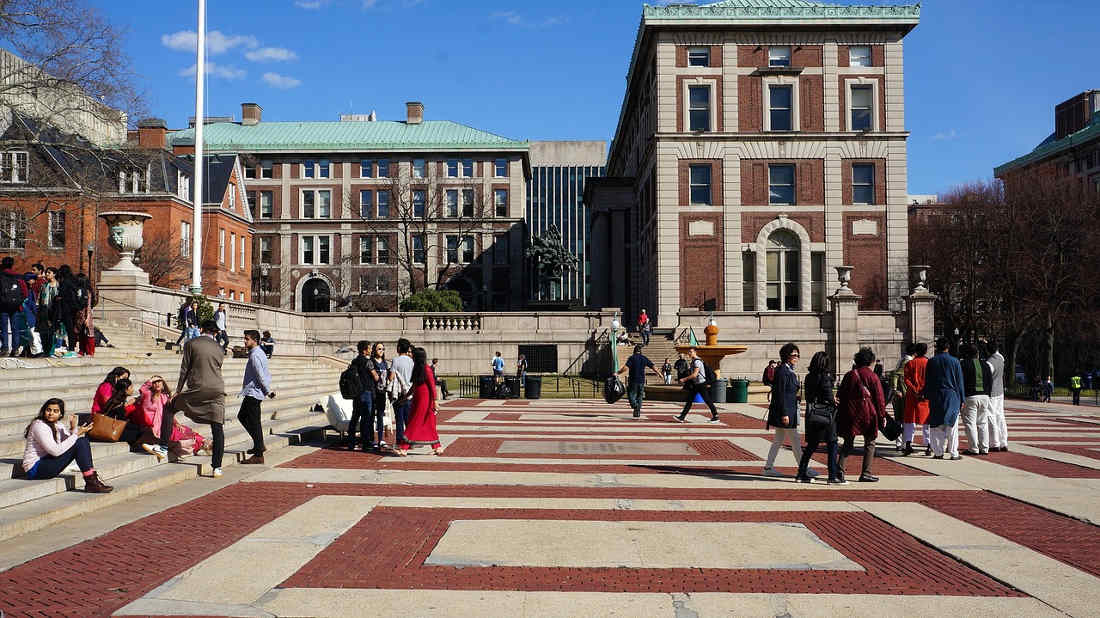
Going abroad for education is a major milestone, meaning you leave behind your homeland, community, traditional cuisine, and relatives. Shifting from the familiar spoken and unspoken guidelines of your native culture to grasping the novel norms and concepts of a foreign nation is a massive change. Learners frequently struggle to adapt in these circumstances.
Frequently, students experience homesickness when thinking about their relatives living far away. Missing familiar dishes is another significant challenge of being an overseas scholar. Although these aspects are often overlooked, they play a crucial role in how well international students adjust and grow.
So, how can you manage these situations and overcome culture shock in a foreign nation? Let us find out.
- Learn about different cultures and how to mesh with people of other cultures:
Nations across the globe possess distinct cultures and varying viewpoints on numerous concepts. For instance, leaving a tip at dining establishments is not seen as disrespectful in Japan, whereas failing to tip in the USA is viewed unfavorably.
Therefore, individuals should interact with as many people as possible, discover their traditions, respect differences, and learn how to navigate them. This will also assist you in making numerous new friends to socialize with and expanding your professional network.
- Explore the country and learn about it:
You can discover a great deal about the nation where you are studying through books, as well as by watching shows and films.
There are numerous fictional works penned by various authors set in different countries that reveal a great deal about their heritage.
Additionally, you can view various British and American television programs to understand the mindset of the local population and grow accustomed to their speech.
One can also explore creations by local artists to gain a deeper insight into their environment.
- Identify the unspoken customs & rules of the Country:
Recognize the implicit customs, regulations, and practices of the nation where you pursue your education. For example, in Russia, friendliness can help accomplish tasks more effectively than standing your ground. Similarly, Canadians are recognized for their courteous and gentle demeanor.
This assists students in blending in more smoothly within a foreign setting and familiarizing themselves with local behavioral expectations.
- Spend less time in missing home and explore the outside world more:
Try to put thoughts of home aside for a while. Although this will be challenging and students will inevitably feel homesick, it is essential to stop dwelling on home and related matters in order to live more fully and succeed academically.
Rather than pining for home, students should rekindle their curiosity and observe how things operate in the outside world. Never hesitate to pose questions to your friends and teachers when you need answers, as these inquiries will help you adjust to the new surroundings. Open-ended questions can facilitate a greater exchange of information.
- Overcome the Language barrier:
Language barriers represent a common hurdle when relocating to another nation, particularly when English is not the primary language spoken there.
A student can readily conquer this obstacle by studying the local language, either by enrolling in classes or by spending more time interacting with residents.
- Get involved in various activities:
Throughout your university years, you will encounter numerous chances to participate in extracurricular pursuits. Do not let these opportunities pass you by, as you can learn a great deal about the populace and their habits through them. Consequently, engaging in these activities is extremely important.
- Prepare for the weather:
Be sure to research the climate of your host nation, as it might differ significantly from that of your home country. You may need to pack your wardrobe accordingly.
- Learn to be self-dependent:
Learn to manage chores like cooking, washing, and cleaning independently, since finding domestic assistance abroad can be difficult. This is a primary reason why individuals face struggles when studying overseas. Being capable of preparing dishes from your homeland can also help you feel more at ease.
- Explore the City :
Discover the city and the neighborhood where you reside. Visit novel locations and experience the culture. Try to grow accustomed to regional cuisine. Forge friendships with individuals you can socialize with and who can offer support if needed.
- Ask for assistance from university:
The international office can aid you in locating housing, arranging tuition payment plans, and securing part-time employment. You can always seek their assistance whenever necessary.
- Be prepared to face challenges:
Ultimately, you must be ready to confront obstacles. There is no escaping this, and you need to accept that you will encounter difficulties initially.
Nevertheless, acknowledging this reality and maintaining an open mind is vital, as it will help you manage during tough times. It is only a matter of time before you grow accustomed to it. Afterward, the host nation will feel just like home!
You Might Also Like
Pharmacy (M.Pharm) Abroad: Fees, Top Universities & Job Scope
Pharmacy is the science and technique of preparing and dispensing drugs. The composition of various courses under Pharmacy are related to manufacturing, monitoring, regulating, developing and testing drugs and pharmaceutical and food products.Pharmacy as a Masters course may be done by people who ha
Read ArticleMasters in Industrial Engineering Abroad: Fees, Top Universities & Job Scope
Industrial Engineering is a branch of engineering dealing with the optimization of complex processes or systems. Its underlying concepts overlap considerably with certain business-oriented disciplines such as Operations Management, but the engineering side tends to emphasize extensive mathematical p
Read ArticleMasters in Financial Engineering Abroad: Fees, Top Universities & Job Scope
Financial Engineering is a multidisciplinary field involving financial theory, engineering methods, tools of Mathematics and Programming. It uses mathematical techniques to solve financial problems and is sometimes referred to as quantitative analysis. Also known as Financial Mathematics, Mathematic
Read Article